
SPOBIS Guest Article: How Cycling Is Becoming Increasingly Attractive to Brands
Published on
Naming rights, hospitality and active communities are turning cycling into a dynamic sponsorship platform. SPORTFIVE, together with SPOBIS, look at why more companies are investing in the sport and where there is still untapped potential for brands.
In this Insight:
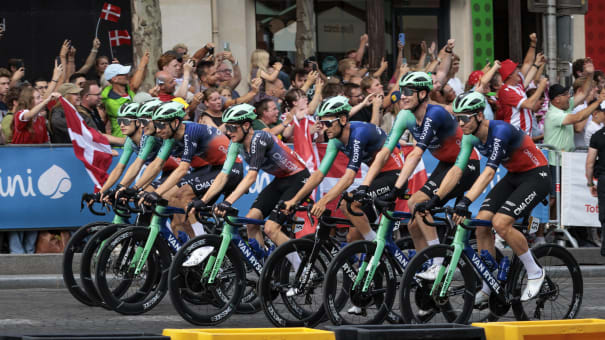
Professional cycling has relied on sponsors for decades. In hardly any other major sport are brands and sporting identity so closely intertwined. Lidl-Trek, Red Bull-Bora-Hansgrohe, DECATHLON-CMA CGM and UAE Team Emirates-XRG already carry the names of their most important backers in their team names. On top of that, there are numerous other partners featured on jerseys, bikes, helmets, glasses, vehicles, training platforms and technical equipment.
Sponsor interest has long extended beyond the cycling industry itself. Technology companies, insurers, retailers, energy providers, tourism destinations and consumer brands are investing in teams and events. At the same time, the nature of these partnerships is evolving. Brands are looking for access to active communities, decision-makers and a sport whose fans also ride themselves.
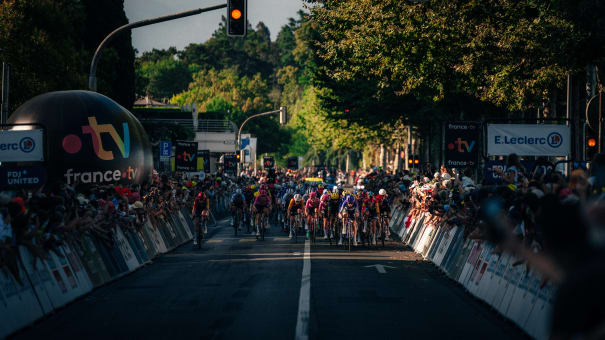
The development is reflected in sponsorship figures. According to SPORTFIVE Business Intelligence, sponsorship in cycling has grown by 19 percent over the past ten years, with growth of 26 percent in 2023 alone. Brand presence also enjoys a high level of acceptance among fans: 68 percent view sponsorship and advertising in cycling as positive or appropriate. Among 27 sports analysed, cycling ranks second. In addition, 43 percent say they are more likely to remember sponsors than conventional advertising.
“We have seen a significant acceleration in demand for cycling partnerships over the past three years,” says Maxime Lebessou, Deputy Managing Director Operations at SPORTFIVE. “Cycling is playing an increasingly important role in our strategic recommendations for brands.”
Figures from France illustrate what Lebessou means. Over the past 18 months, SPORTFIVE has been involved in brokering four major partnerships around cycling events there. In the previous two years, there had been just one. According to Lebessou, these investments are in the multi-million-euro range. The volumes are comparable to shirt sponsorships at leading football clubs and can, in some cases, even exceed them.
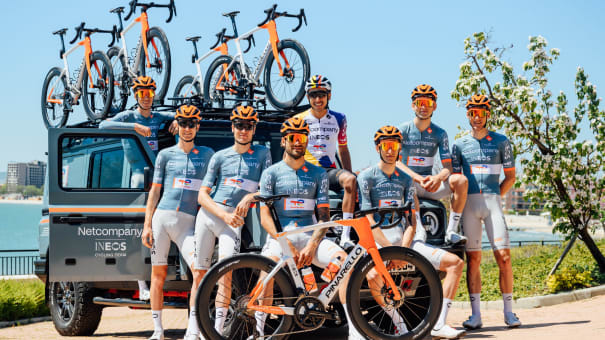
Cycling’s commercial model differs fundamentally from that of many other major sports. A football club keeps its name when its main sponsor changes. In cycling, a change of sponsor can immediately create a new team identity.
The 2026 season provides several examples. Alpecin-Deceuninck became Alpecin-Premier Tech, DECATHLON AG2R La Mondiale evolved into DECATHLON-CMA CGM, and Ineos Grenadiers has competed as Netcompany Ineos Cycling Team since May. Women’s cycling has seen changes as well, including UAE Team ADQ becoming UAE Team L’IMAD, alongside other new title sponsors and adjusted team names.
This gives brands a level of presence that extends far beyond a logo on a jersey. Their names repeatedly appear alongside the team in results lists, media coverage, TV graphics, social media posts and race commentary.
Lebessou sees this as one of the sport’s distinctive commercial assets. “Teams and major events offer brands reach, continuity, guaranteed visibility and repeated exposure throughout the season. Cycling also offers unique assets such as team naming rights and iconic events like the Tour de France, whose recognition extends far beyond the sport itself.”
An analysis by the platform Lead Out of the 2026 UCI WorldTour and Women’s WorldTour illustrates the scale of the sponsorship ecosystem. At the start of the season, it counted a total of 46 title sponsors. Bicycle and equipment manufacturers accounted for just five of them. Another five title sponsors came from software, IT and telecommunications. Energy and utilities, financial services and insurance, retail, and home and construction products each accounted for four. Automotive, tourism, logistics, food and beverage and other industries were also represented.
Below the title-partner level, the sponsor landscape becomes even broader. Lead Out counts 516 partners listed by WorldTour teams. Bicycle and equipment companies account for 193. They are followed by healthcare, wellness and pharmaceuticals with 58 and retail and e-commerce with 56. Food and beverage accounts for 34, technology and telecommunications for 30, finance and insurance for 26, mobility and automotive for 22, and travel and tourism for 20.
Professional cycling has therefore developed a sponsorship structure that extends far beyond its own industry.
Another difference from other sports lies in how closely partners are integrated into the sporting product itself. Bicycle manufacturers provide the athletes’ primary equipment, component manufacturers supply drivetrains and wheels, technology companies provide training and performance data, and apparel brands provide clothing and equipment.
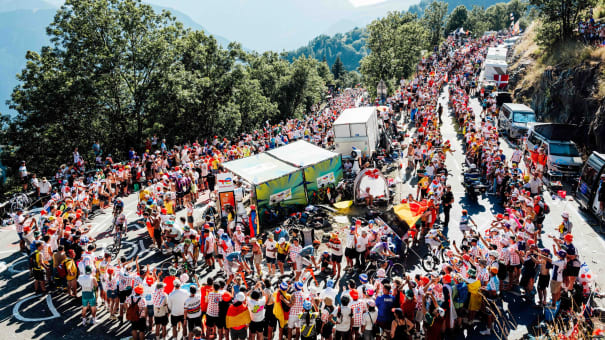
Many of these companies also work with several teams at the same time. According to Lead Out, Shimano is a partner of 14 of the 32 WorldTour and Women’s WorldTour teams analysed, while Garmin works with 13. Wahoo, Canyon and SRAM each partner with twelve teams.
For these brands, cycling offers a combination of product testing, sporting credibility, visibility and direct access to their target audience. A bicycle, cycling computer or smart trainer is used in competition and can subsequently be bought and used by amateur cyclists. This is one of the sport’s distinctive characteristics. Millions of people follow races while also cycling themselves, creating additional touchpoints between sponsors and fans.
According to SPORTFIVE Business Intelligence, cycling also attracts an affluent audience. Cycling fans are more likely than average to purchase premium products. They show above-average affinity for categories including luxury goods, financial services, travel, automobiles, telecommunications and energy drinks. The potential sponsorship fit therefore extends well beyond products directly connected to the sport.
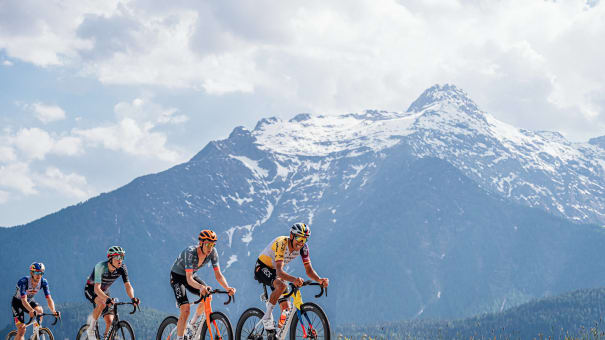
Lebessou points to Groupama as an example. The French insurer uses its involvement in professional cycling while connecting it with grassroots initiatives. Through its “Ton Club, Ton Maillot” programme, amateur clubs in France receive equipment.
“Groupama has understood that the value of cycling extends far beyond visibility at professional races,” says Lebessou. “The brand can activate at different levels of the ecosystem: in professional sport to build awareness and credibility, and in amateur sport to create proximity, engagement and communities.”
This gives sponsors a connection that is harder to establish in many other sports. A fan can watch the Tour de France on Sunday and ride their own road bike on Monday. Brands can use that connection to offer products, organise their own rides, support clubs, produce content or get customers on bikes.
“One of cycling’s particular strengths as a sponsorship platform is its ability to connect the biggest sporting moments with millions of active amateur riders,” says Lebessou.
Cycling has strong appeal among executives and decision-makers, making it a powerful platform for relationship-building and customer retention. We often hear the phrase in this context: cycling is the new golf.
Maxime Lebessou, Deputy Managing Director Operations - SPORTFIVE

This connection is also becoming increasingly relevant in B2B, where cycling is being used as a platform for customer retention, networking and exclusive hospitality experiences. Golf has been a standard tool in corporate relationship management for decades. According to SPORTFIVE, cycling is increasingly taking on a similar role.
Audience data from SPORTFIVE Business Intelligence supports the comparison. Some 43.2 percent of people interested in cycling belong to higher-income population groups. Senior and executive management are represented above average, as are C-level decision-makers. The average age is 43.6, with the strongest age groups ranging from 35 to 64. Men account for 68 percent of people interested in cycling.
The comparison with golf therefore reflects a specific target group and a specific form of activation. Cycling rides allow participants to spend several hours together, with speed, distance and difficulty adapted to their individual level. This creates an environment in which brands and stakeholders can engage directly and build personal relationships beyond the sporting activity itself.
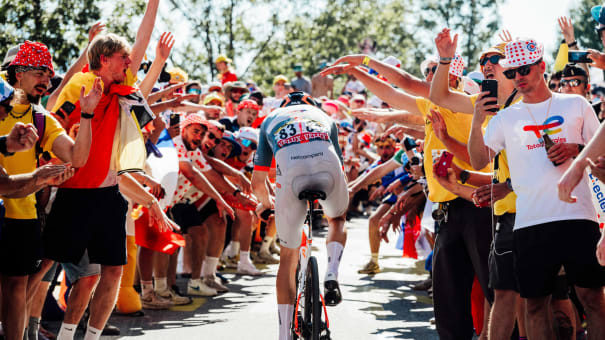
The setting is complemented by exclusive hospitality formats around professional cycling. SPORTFIVE cites experiences such as following a race by helicopter, riding in a team car, meeting riders at a training camp or receiving special access at major events.
“Cycling offers unique money-can’t-buy experiences that are difficult to replicate in other sports,” says Lebessou. “Brands can use them to build closer relationships with important stakeholders in an emotional and memorable environment.”
For companies, this broadens the traditional sponsorship case. TV exposure and brand awareness represent only part of the return. Hospitality, customer retention, community activation and access to active decision-makers add further assets.
Lebessou sees one area as comparatively underdeveloped: the personal brands of riders. In football, basketball or tennis, sponsorship narratives are often built around individual stars. In cycling, commercial assets have historically been concentrated more heavily around teams and events.
The sporting importance of individual riders is extremely high. Historically, however, their commercial impact through personality, lifestyle and social media has been less developed.
Maxime Lebessou, Deputy Managing Director Operations - SPORTFIVE
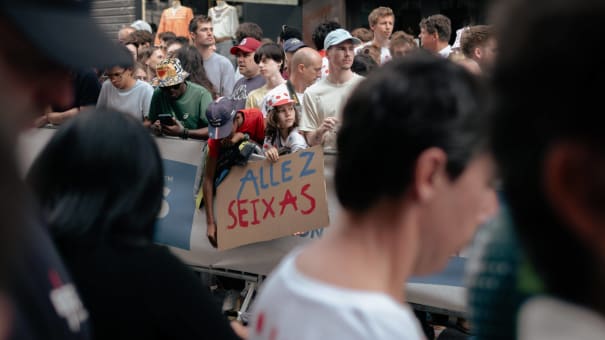
Lebessou believes this represents significant commercial potential. A single rider can win the biggest races, dominate coverage for weeks and make the sporting success of a sponsor directly visible. The connection between individual performance and brand presence is particularly pronounced in cycling.
Lebessou therefore expects riders’ personal brands to become more important. In France, he cites young rider Paul Seixas as an example of a new generation. “Riders who combine sporting success, authenticity and the ability to reach people outside competition can become very powerful brand ambassadors. In individual cases, they may even be more attractive to sponsors than their team.”
This creates additional rights and content opportunities for brands. Behind-the-scenes formats, personal training stories, ambassador programmes or digital communities can put riders more firmly at the centre. Teams and events retain their central commercial role by providing continuous presence throughout the season, while riders can personalise individual stories and reach new audiences.

The high acceptance of sponsorship among cycling fans provides brands with favourable conditions, but it does not automatically translate into impact. According to SPORTFIVE Business Intelligence, 37 percent of fans say they are more likely to buy a sponsor’s products. In addition, 57 percent view sponsorship in cycling as socially responsible.
At the same time, the sheer number of sponsors creates a challenge. A brand that is one of many logos on a jersey can disappear into the background despite high reach. Lebessou therefore identifies insufficient activation as the biggest mistake brands make when entering cycling. “From a sponsorship perspective, cycling is a highly competitive and crowded environment,” he says. “Without activation, even a very visible partnership can quickly become part of the background.”
This applies particularly to partners investing large sums in naming rights. Media exposure alone provides continuous visibility. Building a clear connection between the brand, the team and the target audience requires additional stories and experiences.
Lebessou points to content, authentic storytelling, community engagement and year-round activation. In his view, successful sponsorship also starts with choosing the right team. Companies should assess which other partners they will appear alongside and whether those brands’ positioning is compatible with their own, as several brands simultaneously shape a team’s identity.
“The strongest cycling partnerships create their own brand territory and give fans a reason to engage with the brand beyond the logo,” says Lebessou.
This is where the sport’s further potential becomes apparent. Cycling already has a closely interconnected commercial network, with an unusually deep integration of sponsors into teams and a wide range of activation opportunities.
For sponsors in cycling, the key lies in strategically connecting these elements. Professional sport, product ecosystems, grassroots cycling, B2B hospitality and riders’ personal stories are closely intertwined and can reinforce one another.
For brands, the result can be an ecosystem that extends far beyond logo exposure during a race, turning a logo in the peloton into a platform that reaches from the biggest race of the year to a ride with customers the following weekend.
Frequently Asked Questions
Sponsorship is the financial support for a sporting event, organisation or athlete by an outside body, for the mutual benefit of both parties. At the professional level this tends to be by companies, to raise the profile of their brand by associating it with the athlete.
The company aims to generate brand awareness and customer recognition, whilst the event, organisation or athlete receives a boost in funding.
A popular example is a brand logo printed on a team shirt. Visibility is guaranteed, even more so in the modern world with social media and online highlights.
In the land of media and marketing rights today, there is no cookie-cut solution for brands, and a simple logo placement will not provide the sufficient return on investment (ROI) for sponsorship, nor does it give their target audience the “why?” - the reason to spend their money and engage with the product.
Companies investing in sports sponsorship need to look at the bigger picture to engage with fans and not rely on just one piece of inventory.
Sponsors get the opportunity to showcase their brand and products to a greater audience of varying demographics. The global nature of sport today means that athletes feature within competitions that attract millions, sometimes billions of viewers worldwide. By placing their brand within this sphere, organisations can catch the attention of people around the world.
In modern times, the value of social media cannot be underestimated. Even traditional forms of sponsorship are likely to appear on social media, opening the brand up to an even wider audience - even appearing in new territories.
Through placements on jerseys and advertising boards, sponsors get a high visual presence and become part of the action. If visibility is the core objective, then it's a surefire way to succeed, whether that’s inside the stadium, TV or online.
It is the emotional engagement which sets sponsorships in sport apart from almost all other forms of advertising and sponsoring initiatives. Traditional advertising platforms such as TV can attain similar reach figures to sport, but can’t compete with sports fans’ engagement.
Partnership marketing is an important part of the sports industry. It involves collaboration between a sports team, league, or event and a brand or company. This collaboration can take many forms, such as sponsorship, product placement, or joint promotions. The goal of partnership marketing is to benefit both parties by increasing exposure, revenue, and brand recognition.
By partnering with a sports team or league, a brand can reach a large audience of fans who are passionate about their sport. This can lead to increased brand recognition and customer loyalty, as well as increased sales of particular products. Additionally, by offering special promotions or experiences, teams and brands can create a more memorable and enjoyable experience for fans.
When selecting the right type of partnership, teams and brands should consider factors such as brand values, fan demographics, and the overall image of the sport, to ensure it remains authentic whilst still connecting with the target audience.
Sports athlete sponsorships are those where individual athletes are sponsored by a brand. They may wear branded apparel whilst competing or during commercial appearances and press conferences, or they might appear in advertisements or other promotional materials for the brand. The brand will either offer a set fee to them, or pay for their kit, equipment or travel in return.
Sports organisation sponsorships involve entities like a team or league being sponsored by a brand. Like with individual athletes, they will either receive a fee from the brand, or payment for things like kits, equipment or ground maintenance.
In return, a team may display the company’s logos around its stadium, for example, while a league might include the sponsor in its name.
Sports event sponsorships are where sports events — like an international or regional tournament — are sponsored by a brand. This type of partnership can involve things like the event either changing its title to incorporate the brand’s name, or using the brand’s logo on official products. The event organisers will either receive a set fee or have expenditures like venue hire, hospitality, catering, publicity, programmes and officials’ costs covered.
A good sponsorship fit is characterised by the alignment of the sponsoring brand with the sponsored entity in a way that creates mutual value and resonates with the target audience. Several factors contribute to a strong sponsorship fit:
Relevance: The sponsorship should align with the values, image, and interests of both the sponsoring brand and the sponsored entity, creating a natural and authentic connection.
Target Audience Alignment: The audience of the sponsored entity should closely match the target demographic of the sponsoring brand, ensuring that the partnership reaches the right consumers.
Brand Image Consistency: The sponsorship should enhance, not contradict, the overall image and messaging of the sponsoring brand, contributing positively to its perception.
Engagement Opportunities: A good fit provides meaningful opportunities for engagement, whether through events, activations, or collaborative campaigns, ensuring that the partnership goes beyond mere visibility.
Mutual Goals: Both the sponsor and the sponsored entity should share common objectives and goals, fostering a collaborative approach to the partnership.
Long-Term Viability: Ideally, a good sponsorship fit has the potential for a long-term relationship, allowing both parties to grow and evolve together.
Ultimately, a successful sponsorship fit is one where the collaboration is strategic, authentic, and creates a win-win scenario for both the sponsor and the sponsored entity.
