Hospitality - More Than Just All You Can Eat
Published on
by Mara Kottke
Boxes, lounges and the like - you probably think of good catering and drinks. But hospitality is so much more, as the areas in the stadiums are already proving.
In an interview with the German magazine Stadionwelt, Mario Lucan, Vice President E-Commerce & Hospitality, talks about the future of hospitality and what makes it so special.
You can find the interview in full length here in German.
In this Insight:

How has the hospitality experience changed in recent years?
Where "all you can eat" and B2B networking used to be crucial, the requirements of the individual target groups have diversified considerably. Rights holders and venues must recognise these changes and respond accordingly. Nowadays, the hospitality experience is no longer limited to the match day, but begins with the search for information on the offer. "This is where SPORTFIVE comes in with digital and automated solutions such as our Official VIP online ticket shop and an after-sales platform to offer customers a state-of-the-art customer experience," says Mario Lucan.
A diversification in the design of the boxes can also be observed in the stadium itself. Many clubs are focusing on alternative box and lounge concepts, where the focus is no longer exclusively on the game. The clubs and their partners are striving to create a holistic experience for the guest.
Current trends in Hospitality
Boxes are still popular for client invitations and networking. However, the trend is now to combine the sporting event with additional content such as keynote speeches or expert talks to further strengthen the business context. In parallel to the consistent demand from companies for boxes, the numbers of private customers for hospitality packages are also on the rise.
Regardless of whether it is a business area, an open bar area, food stations or a sports bar - the facilities must always be geared to the target groups, be versatile and correspond to the circumstances of the venues. In doing so, the stadiums and arenas take their cue from modern event venues with which they are in competition. The goal is to use the sports facilities not only for the home matches, but also for numerous other events. For this reason, the venues are continuously modernised and converted in order to be able to offer ever better multifunctionality.


.jpg)
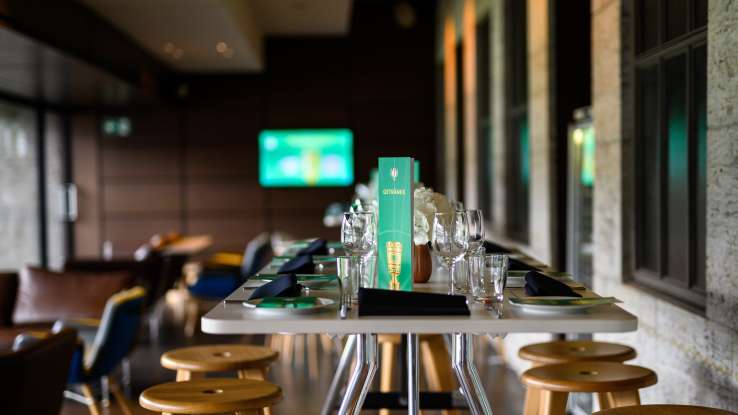


Without the human factor, hospitality will never work - because the product does not live from maximum efficiency and process optimisation, but from a good time.
Mario Lucan
Hospitality in German stadiums is becoming increasingly digital
Through digitalisation, many processes can be automated and made efficient, which plays a crucial role in the further development of the experience. "Without the human factor, hospitality will never work - because the product does not live from maximum efficiency and process optimisation, but from a good time. And this good time is created primarily through human contact and exchange," says Lucan. Clubs need to identify the areas where efficiency and optimisation are needed - such as ticketing or admissions. Both the digital and the human are equally indispensable in further development and do not contradict each other.
However, the marketing of hospitality experiences should definitely be made more digital. It can be observed that the average age structure of guests in hospitality areas is getting older. To address younger target groups, traditional methods such as PDFs and presentations are not enough. Instead, digital marketing must be used.
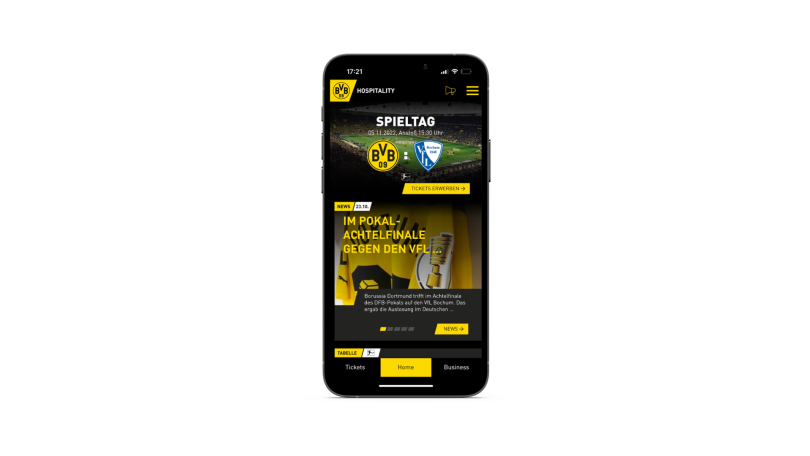
A successful example of digital services: the After Sales App at Borussia Dortmund
The app offers customers an efficient and quick solution for managing their tickets. Instead of a paper ticket, they receive all relevant information about the match and their visit to the hospitality area in the app on match day. In addition, the business network in the app allows customers to network before, during and after the match day via their smartphone.
The future of Hospitality
A customised experience will play a significant role in the coming years as customers increasingly demand to design their hospitality experience independently and individually. A clear line is nevertheless important. "Depending on the club, the product has to stand out from what other clubs offer - for example, through a strong brand as well as specific experiences that are only available at that particular club. Otherwise the experience becomes interchangeable," says Mario Lucan in the Stadionwelt interview.





A Hospitality/VIP invitation is more than just a ticket: it’s your access to an exclusive fan club and business network. From employee incentivisation to maintaining or forming business relationships, Hospitality is diverse and effective. 72% of VIP guests generate business through the networks in the Hospitality areas. Take advantage of this unique platform by diving into the fervour surrounding the sport and give your customers, business partners and employees an experience they won’t forget.
VIP hospitality refers to a premium service and experience offered to individuals attending events, typically in sports, entertainment, or special occasions. VIP hospitality packages provide exclusive amenities, comfort, and access, elevating the overall event experience for high-profile guests. Key features of VIP hospitality may include:
Premium Seating: Access to the best seats in the venue, often offering an unobstructed view of the event.
Luxury Suites: Private suites or lounges equipped with comfortable seating, catering services, and personalised attention.
Gourmet Catering: High-quality food and beverage options, ranging from gourmet meals to exclusive bars and refreshments.
Exclusive Access: Opportunities for meet-and-greets with performers, athletes, or celebrities, adding a personalised touch to the experience.
Amenities and Perks: VIP guests may receive special gifts, event merchandise, or exclusive event memorabilia.
VIP hospitality is designed to cater to the discerning tastes of high-profile individuals, corporate clients, or those seeking an enhanced and exclusive event atmosphere.
To purchase hospitality tickets, one common approach is to use exclusive agencies or authorised providers associated with the event or venue. These agencies specialise in offering premium hospitality experiences, including VIP tickets, luxury suites, and special access packages. Here's a general process:
Identify Exclusive Agencies: Research and identify agencies authorised to sell hospitality tickets for the specific event or venue you're interested in. These agencies, such as SPORTFIVE, often have official partnerships with organisers.
Visit Official Event Websites: Check the official website of the event or venue for information on authorised hospitality providers. Many events provide links or details about official hospitality packages.
Contact Authorised Sellers: Reach out to authorised hospitality sellers directly through their websites or contact information. Inquire about available packages, pricing, and any exclusive perks.
Purchase Through Reputable Channels: Ensure you purchase tickets through reputable and authorised channels to avoid scams or counterfeit tickets. Exclusive agencies provide a secure and official means of acquiring premium hospitality tickets, enhancing the overall event experience.
SPORTFIVE is a global sports marketing agency that operates in the sports and entertainment industry. The agency specialises in various aspects of sports marketing, including the sale of sports media rights, sponsorship and partnership management, and the creation of marketing strategies for sports organisations, teams, and events. They work with a wide range of clients, including sports leagues, clubs, and brands, helping them maximise their commercial potential in the sports market.
SPORTFIVE is known for its expertise in negotiating and managing broadcasting rights, which involves securing deals for the distribution of sports content through various media channels. Additionally, they are involved in the management of sponsorship agreements, helping sports entities form partnerships with brands for mutual benefit.
B2B stands for "Business to Business," representing a type of commerce where transactions occur between two businesses rather than between a business and individual consumers.
In a B2B relationship, companies provide products, services, or solutions to other businesses. This can involve the exchange of raw materials, finished goods, services, or expertise. B2B transactions are often characterised by larger order quantities, complex negotiations, and longer sales cycles compared to business-to-consumer (B2C) transactions.
Examples of B2B transactions include a manufacturer selling components to another company, a software company licensing its products to businesses, or a marketing agency providing services to corporate clients. B2B interactions play a crucial role in the overall economy, forming intricate networks of suppliers, distributors, and service providers that contribute to the functioning of various industries.
In the context of sports, B2B (Business to Business) relationships are highly relevant and play a significant role in the functioning of the sports industry. Various businesses collaborate and engage in B2B transactions to support and enhance the sports ecosystem. From sponsorships and partnerships, broadcasting and media rights, merchandising and apparel and to event and facility management, B2B relationships run all the way through in the sports industry.
B2C stands for "Business to Consumer," representing a type of commerce where businesses sell products, services, or solutions directly to individual consumers.
In a B2C relationship, companies typically market their offerings to a broad consumer audience and engage in transactions with individual buyers.
This model is commonly associated with retail, e-commerce, and various direct-to-consumer business models. B2C transactions are characterised by smaller order quantities, shorter sales cycles, and a focus on creating a positive and personalised customer experience.
Examples of B2C transactions include online retail purchases, subscriptions to streaming services, and interactions with service providers catering directly to individual consumers. The B2C approach emphasises understanding consumer needs, building brand loyalty, and creating seamless purchasing experiences to appeal to the individual consumer market.
B2C is highly relevant to the sports industry as it involves the direct interaction between sports-related businesses and individual consumers. Several aspects of the sports business align with B2C principles, from ticket sales, to merchandising, fan memberships and subscriptions, as well as engagement on digital platforms.
